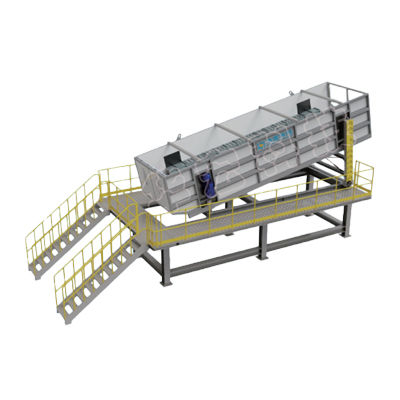
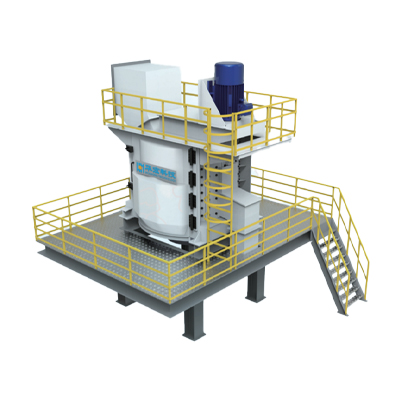
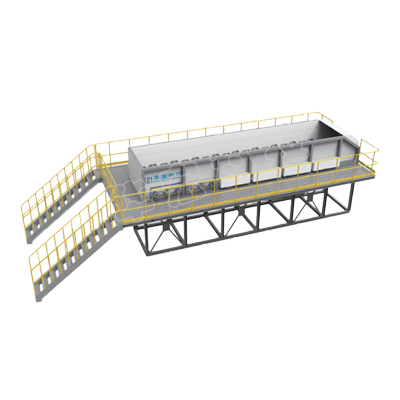
The drum screen is a classic screening device used in the pretreatment of solid waste. It is classified into shafted and shaftless drum screens. The drum body is inclined and rotates at a low speed; the lifting plates inside the drum cause the material to continuously tumble and loosen, enabling classification and screening based on particle size. The material enters the drum from the feed end: fine particles smaller than the screen openings pass through the screen plates in the drum wall and fall down; larger pieces exceeding the screen openings are conveyed along the interior of the drum to the discharge end and then expelled. The drum can be designed with a single-stage or multi-stage configuration featuring variable aperture sizes, allowing 2–3 particle-size fractions to be separated in a single pass.
1. Shaft-type drum screens: They have a simple structure and low cost, and are suitable for drying sand, gravel, organic fertilizer, and mineral materials with little entanglement.
2. Shaftless roller screen: It has no central main shaft, thereby preventing ropes, cloth strips, and long fibers from entangling and jamming the screen. It is primarily used for complex solid waste such as municipal solid waste, aged and decomposed waste, and construction and demolition waste.
Product name
Trommel screen
Product introduction
Product features